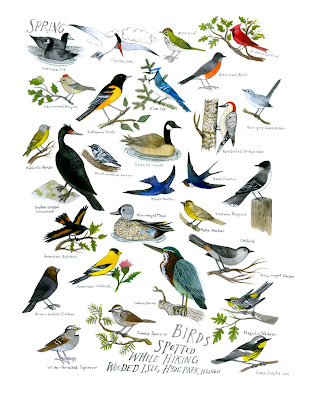
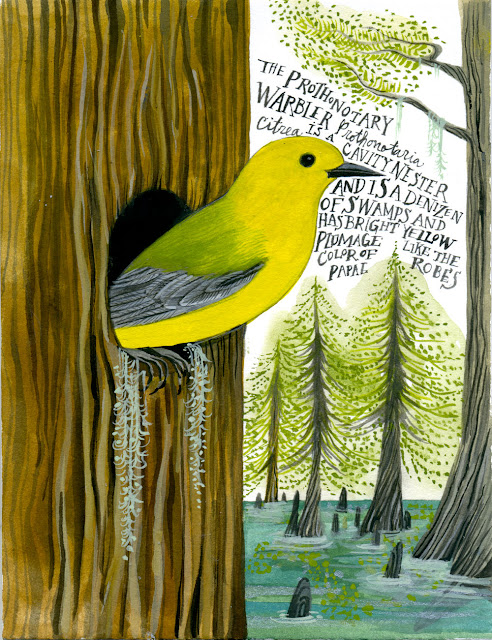
The spring bird migration is winding down here. Still many species coming through the Chicago area as they migrate to northern breeding grounds, but less so than a few weeks ago.
Bird are not the only critters migrating during the spring. There are several species of bats that travel through our area as well. One of the most common bat migrants is the little Red Bat
Lasiurus borealis.
Red bats are so named for the reddish to orangish color of their fur, with the males being deeper in color. They feed on moths, beetles, ants, and other insects, and with the exception of migration and breeding seasons, they are solitary in nature. It's known as a tree bat, roosting in deciduous trees, and sometimes the occasional conifer tree.
Due to their use of echolocation, bats, unlike migrating birds, are less prone to colliding with larger buildings in urban areas such as Chicago. It does happen, though. My daughter's baby sitter showed me a photo she had taken of a little red bat she had found sitting on the sidewalk near a friend's apartment in downtown Chicago. She didn't know what it was, and said that the poor little guy was just sitting there, a bit disoriented. Once we ascertained that it was a Red Bat, I spoke with a couple biologists at the Field Museum. One said that when bats collide with buildings, it usually just stuns them for a bit. But that if they end up on the ground, they can get cold and go in to a sort of torpor. When this particular individual would find one, he would pick it up and warm it up in his gloved hands. Once warmed the bat would come out of its torpor and fly off. I am by NO means recommending that anyone should pick up a bat, especially if they are not a trained wildlife professional, but it made me feel good to know that these little guys had someone out there helping them.
To learn more about bats in general check the wonderful
Bat Conservation International site.
I will be at the Field Museum tomorrow (Thursday), and so if you follow me on instagram or twitter I'll be posting a few photos.